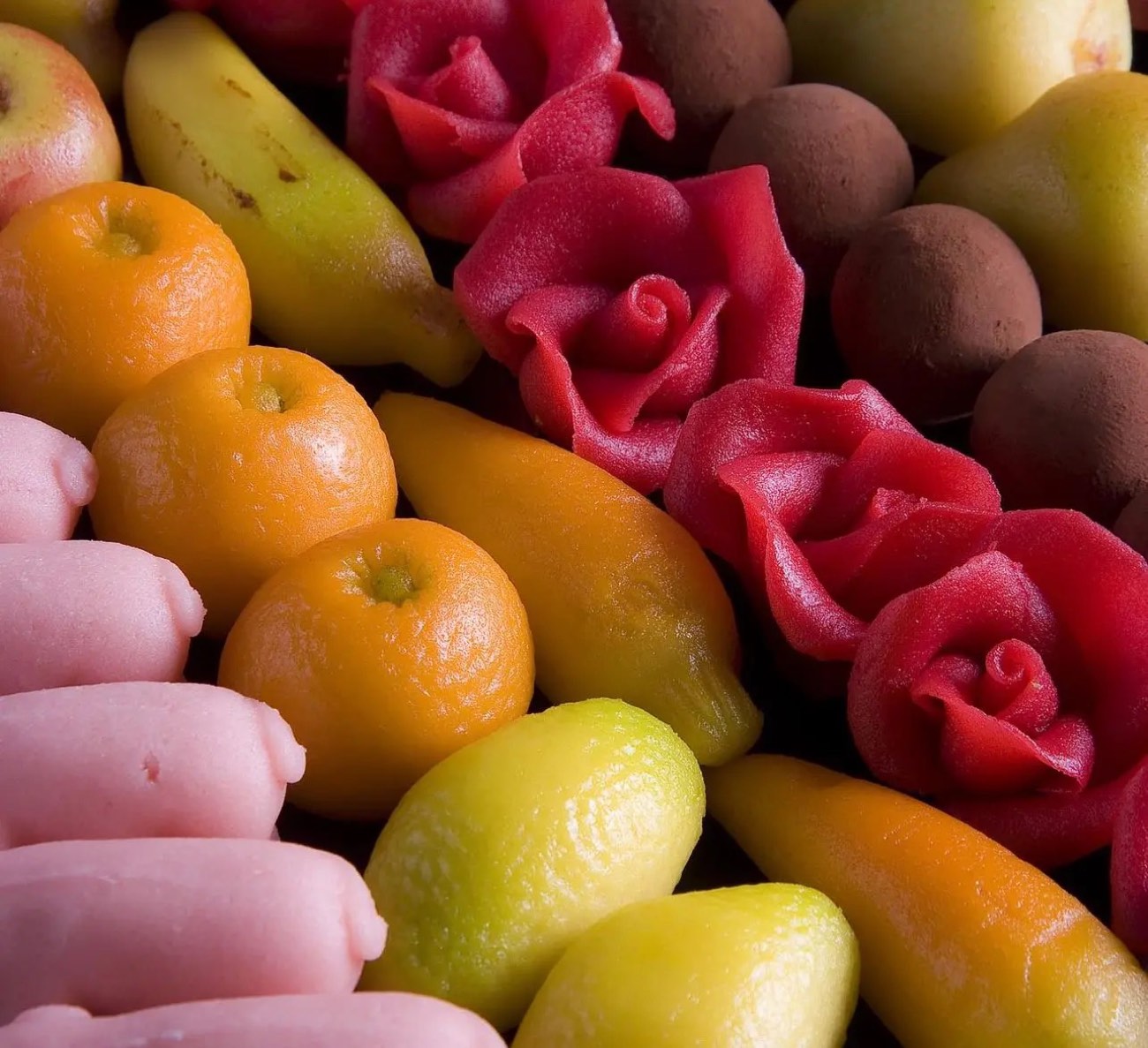
Marzipan, this soft and flavourful confection made of almonds and sugar, has a rich and fascinating history spanning continents and centuries.
Uncertain origins and delicious legends
The precise origins of marzipan remain a mystery, steeped in legend. Some point to a 9th-century Persian creation, others attribute it to the Arabs, who are said to have introduced it to Europe in the 12th century. One legend has it that it was invented in Lübeck, Germany, in 1407 to save the town from famine: with only almonds, sugar and water, the inhabitants made loaves of sweet paste.
A delicious journey across Europe
From the Middle Ages, marzipan spread across Europe, prized by nobles and merchants alike. Its production developed in monasteries and guilds, giving rise to a variety of recipes. In France, the town of Provins became a renowned centre as early as the 14th century. In Italy, “marzapane” takes on artistic shapes for Christmas and Easter; in Spain, “mazapán” is a must at year-end celebrations.
From a symbol of wealth to an accessible pleasure
Over the centuries, marzipan, once reserved for the elite, became more accessible. Production modernised and new varieties appeared, incorporating chocolate, pistachio or coconut. Today, it is enjoyed all over the world — plain, coated in chocolate, in biscuits, cakes or decorative figurines.
Marzipan today: a timeless delight
Marzipan retains its place of honour in culinary traditions. Its artisanal production carries on an age-old know-how, while new creations reinvent it with novel flavours and shapes. More than a confection, it is a true gourmet heritage, a witness to exchanges between civilisations. The next time you taste a piece, take the time to appreciate its melting texture — and the story it tells.